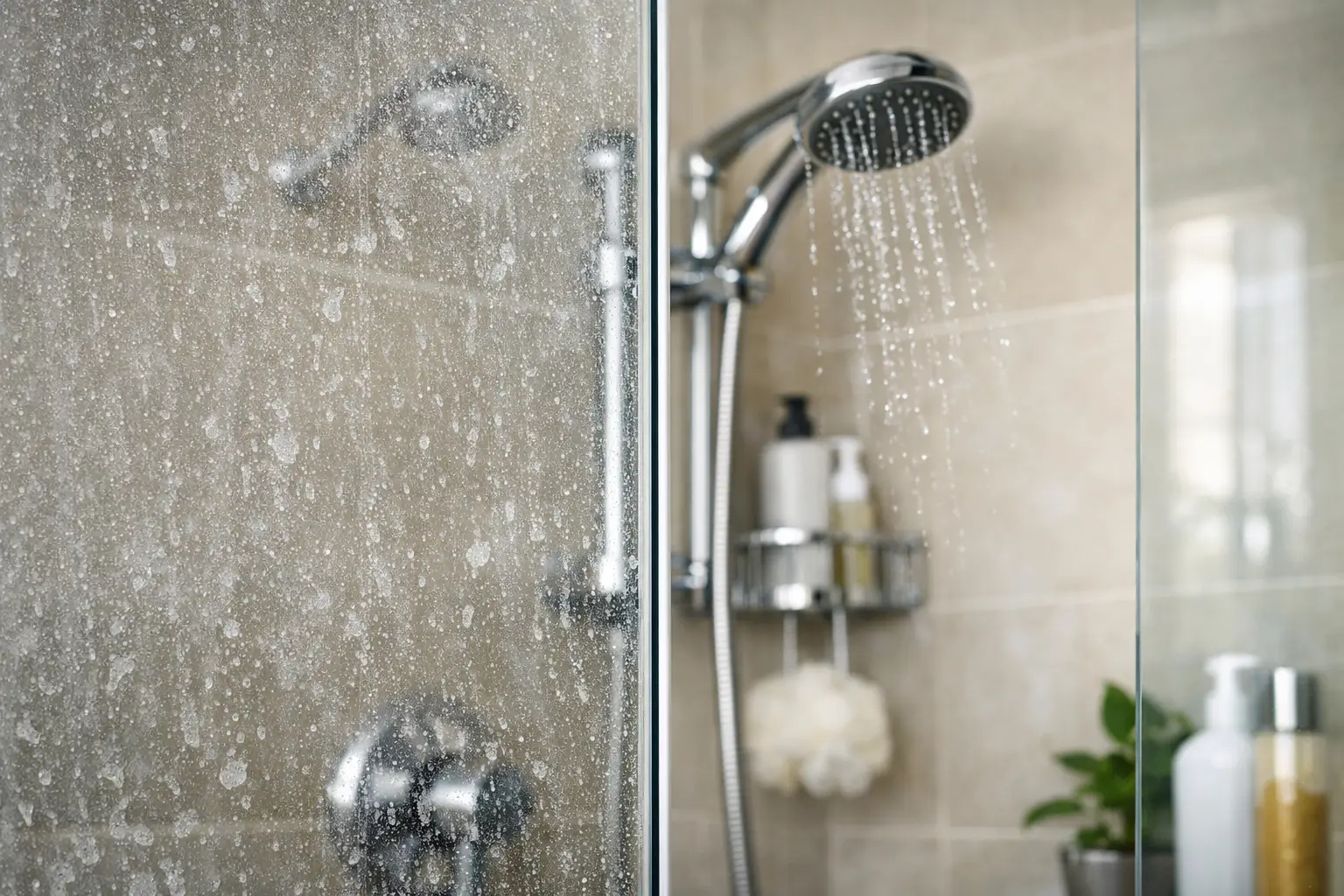
A new glass shower enclosure can make the whole bathroom feel brighter, larger, and more intentional. Then the first cloudy white spots appear near the bottom corners. If your search is “prevent hard water stains shower glass,” the answer is not a single miracle cleaner. It is a practical routine combined with the right glass, hardware, and installation details from the start.
Hard water staining is especially frustrating because it can look like dirt even when the shower has been cleaned. In reality, minerals left behind as water evaporates can bond to the surface over time. Once that buildup becomes etched into the glass, removing it is more difficult and may require professional attention. A few consistent habits protect the polished look you chose in the first place.
Why Hard Water Leaves Marks on Shower Glass
Water often contains dissolved minerals, primarily calcium and magnesium. When shower water dries on glass, those minerals remain. At first, they may show up as faint droplets or a chalky film. Repeated exposure can create heavier white scale, dulling the clarity of a frameless or semi-frameless shower door.
Soap residue makes the issue worse. Body wash, shampoo, and conditioner can mix with mineral deposits to form a hazy layer that does not rinse away easily. The lower sections of a shower panel, around hinges, and near the door sweep are common trouble spots because water lingers there longest.
The key distinction is that surface buildup is manageable, while mineral etching is permanent damage to the glass surface. Prevention is less about making glass maintenance-free and more about keeping water from sitting long enough to leave its mark.
How to Prevent Hard Water Stains on Shower Glass Every Day
The most effective maintenance step takes less than a minute: remove water from the glass after each shower. Keep a quality shower squeegee within reach and pull it from top to bottom across the inside of the door and fixed panels. Follow with a quick pass along the bottom edge, where droplets tend to collect.
This does not need to be a perfect cleaning ritual. The goal is simply to reduce the amount of water left to evaporate. For busy households, even squeegeeing the most visible areas makes a meaningful difference.
After squeegeeing, leave the shower door partially open when possible. Better airflow helps moisture escape rather than collecting inside the enclosure. Run the bathroom fan during the shower and for 15 to 20 minutes afterward, particularly in bathrooms without a window. Ventilation will not remove minerals from water, but it shortens drying time and helps control the humidity that contributes to soap film and mildew around seals.
A microfiber cloth is useful for the final droplets around hardware, handles, and the bottom corners of the glass. Avoid abrasive pads, rough sponges, or dry scrubbing. They can scratch glass or damage protective surface treatments, turning a maintenance issue into a more visible finish issue.
Use a Cleaner That Respects the Glass and Hardware
A light weekly clean prevents small deposits from becoming stubborn scale. A non-abrasive, glass-safe cleaner and a soft microfiber cloth are usually enough for routine care. Apply the cleaner according to its directions, allow it to work briefly, then rinse and dry the glass rather than letting the product dry on the surface.
Homeowners often reach for strong acidic products when they see hard water spots. These can work on mineral deposits, but they are not automatically suitable for every shower enclosure. Aggressive cleaners may affect certain hardware finishes, silicone seals, natural stone nearby, or specialty glass coatings. Bleach-based products are also not the answer for mineral scale and can create unnecessary odor and surface concerns.
If you use a vinegar-based solution, use it sparingly and avoid it on natural stone, unsealed grout, and sensitive metal finishes. Never mix cleaning products. When in doubt, choose a manufacturer-approved cleaner for the glass and hardware installed in your shower.
What to Do When Spots Are Already Visible
For light spotting, start gently. Clean the glass, rinse it thoroughly, and dry it with a clean microfiber towel. Repeating this process once or twice a week is more effective than waiting until buildup is heavy.
If the spots remain after proper cleaning, they may be more than surface residue. A professional can assess whether the glass has mineral buildup, coating failure, scratches, or etching. This matters because stronger cleaning methods do not repair etched glass and may make the appearance worse.
Choose Protective Treatments Before Buildup Starts
A protective glass treatment can make a real difference, especially in homes with hard water or showers used by several people daily. These treatments help water bead and slide off more easily, reducing the minerals left behind after evaporation. They also make routine cleaning faster because soap film and residue have less opportunity to cling to the surface.
There is a trade-off: coatings are not permanent permission to stop cleaning. Their performance depends on the product, the quality of application, water conditions, and how the glass is maintained. Some treatments are applied during fabrication or installation, while others are maintenance products that need to be refreshed periodically.
For a bathroom renovation or new build, discuss glass protection before selecting the enclosure. It is easier to protect pristine glass than to restore glass that has already developed cloudy mineral staining. A glass professional can also advise whether a treatment is compatible with the chosen hardware, door configuration, and cleaning plan.
Design Choices That Make Cleaning Easier
Good shower design supports good maintenance. Frameless glass creates a clean, open look with fewer visual interruptions, but it also puts the glass itself on display. That makes clear glass care more noticeable. Semi-frameless options can offer a similar modern appearance with different sealing and support details, depending on the layout.
The right door swing, panel placement, and drainage details matter as well. A properly measured and installed enclosure directs water where it should go and minimizes unnecessary pooling at the base. Door sweeps, seals, and aligned hardware should fit correctly so water is less likely to escape or collect in places that are difficult to wipe.
For some bathrooms, a fixed shower panel is easier to maintain than a full enclosure because there are fewer edges, seals, and moving components. For others, a hinged door is essential for access and comfort. The best choice depends on the room’s dimensions, the shower layout, ventilation, and how the household uses the space. Custom glass is valuable here because a precise fit can support both the design vision and day-to-day care.
Pay Attention to Hardware and Edges
Glass may get most of the attention, but hardware needs routine care too. Wipe hinges, handles, clamps, and channels dry after cleaning to prevent water spots from building on metal finishes. Check door sweeps and bottom seals occasionally for trapped hair, soap residue, or mineral deposits.
Do not pull, scrape, or trim seals unless you know they are meant to be replaced. Small components play an important role in how a shower door closes, drains, and contains water. If a door begins rubbing, dragging, leaking, or closing differently, arrange a service assessment rather than forcing the hardware.
Consider the Water Source, Not Just the Surface
If hard water affects faucets, dishes, appliances, and shower glass throughout the home, it may be worth evaluating a water softener or conditioning system. This is a larger household decision, not a requirement for every bathroom. A water treatment system can reduce mineral exposure, but it involves upfront cost, ongoing maintenance, and a choice that should be based on your water quality and household needs.
Even with softened water, regular shower care still matters. Soap, personal-care products, and airborne dust can leave a film on glass. Conversely, a consistent squeegee-and-clean routine can keep an enclosure looking excellent even when a whole-home water treatment system is not practical.
Build a Routine You Can Actually Keep
The best routine is the one everyone in the home can follow. Keep the squeegee visible, store a microfiber cloth nearby, and make the weekly clean part of the regular bathroom schedule. Avoid saving all maintenance for a monthly deep clean, when scale is more likely to need extra effort.
For homeowners planning a custom shower, bring maintenance into the conversation early. At Accel Glass Services, careful measurements, quality installation, and practical guidance help create shower glass that looks refined on installation day and remains easier to care for afterward.
Clear shower glass is not meant to demand constant attention. With a well-fitted enclosure, gentle cleaning products, and a few seconds of care after each shower, it can continue to reflect the clean, finished bathroom you envisioned for years to come.
Leave a Reply