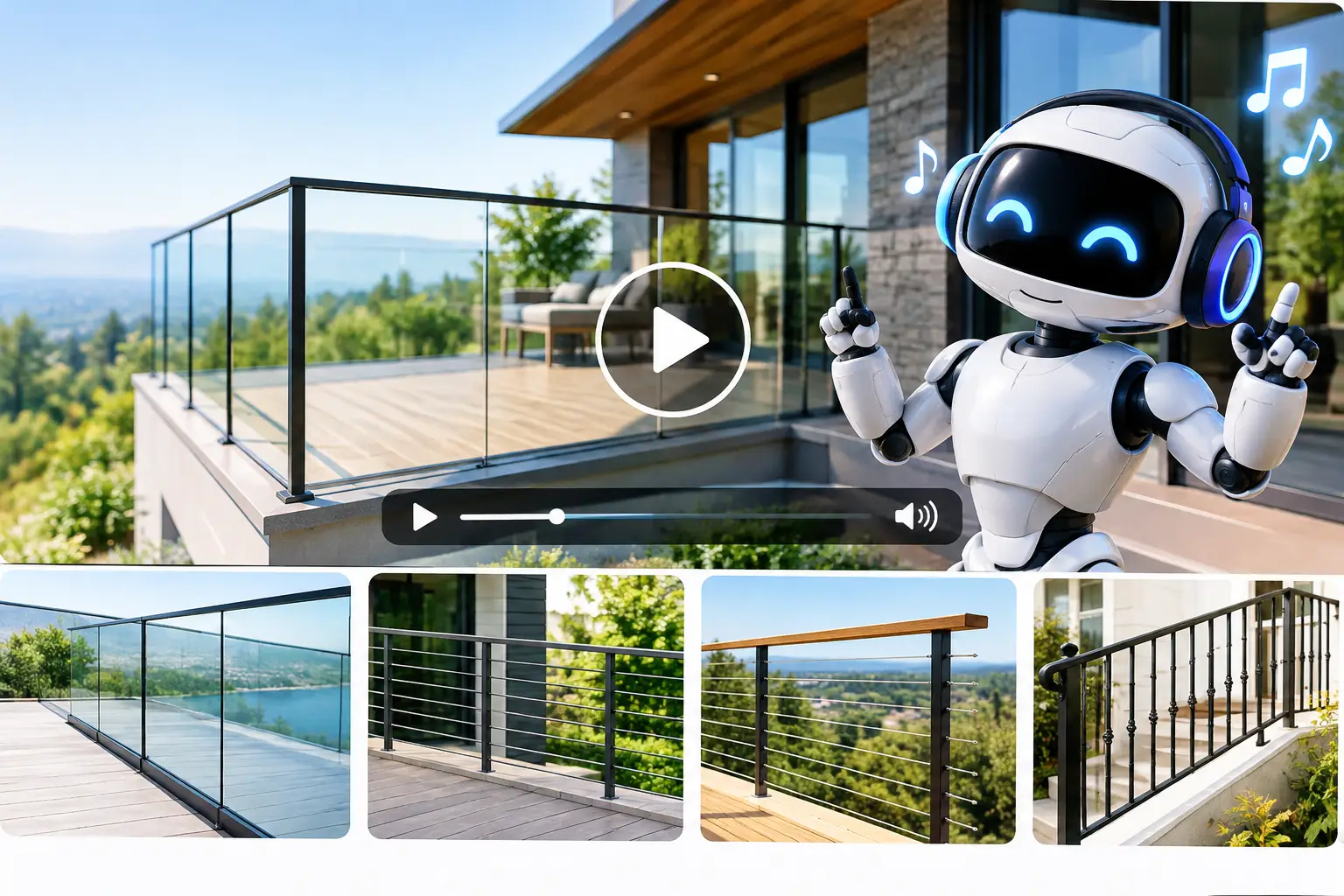
A railing has a bigger visual job than most homeowners expect. It frames the staircase, defines a deck edge, and sits directly in the sightline from adjoining rooms. The best railing styles for modern homes do more than meet safety requirements – they preserve light, support the architecture, and feel intentionally matched to the rest of the property.
For a new build or renovation, the right choice is rarely just about selecting a material. It comes down to the view you want to keep, the maintenance you are comfortable with, the location of the railing, and the mounting details that make the finished installation look clean rather than pieced together. In Edmonton-area homes, exterior exposure and winter conditions also deserve careful consideration from the start.
Start With the Architecture, Not the Catalog
Modern design is not one fixed look. A warm contemporary home with oak floors and soft neutral finishes calls for a different railing than a black-and-white minimalist interior or a sharp, industrial-style infill project. The most successful railing systems repeat materials and lines already present in the home: black window frames, brushed metal fixtures, pale wood treads, stone cladding, or expansive glass.
Before choosing a style, look at the railing from the main viewing angles. On a stairway, this may be the front entrance and the living room. On a deck, it may be the kitchen, primary bedroom, or backyard. A railing that appears understated when viewed up close can become a major visual barrier when you look through it every day.
Code compliance, guard height, openings, handrail needs, and structural support must shape the design as well. A professional site review helps prevent a common problem: choosing a beautiful system first, then discovering that the stair layout, substrate, or local requirements call for different hardware or configuration.
Best Railing Styles for Modern Homes
Frameless Glass Railings for Open Views
Frameless glass is often the leading choice when the goal is an open, elevated look. Clear tempered safety glass panels are secured with low-profile clamps, posts, or a base shoe, creating a guard that protects the edge without interrupting the view. It works especially well around decks, balconies, open-to-below staircases, and interiors where daylight is a defining part of the design.
Its strongest advantage is visual quiet. Glass does not compete with a statement staircase, landscaped yard, lake view, or carefully selected flooring. It can also make a narrower stair opening or smaller deck feel more generous.
The trade-off is that glass needs regular cleaning to maintain its crisp appearance. Exterior panels collect dust, water spots, pollen, and winter residue, while indoor panels show fingerprints near high-traffic areas. Quality hardware and precise installation matter just as much as the glass itself. Panels must be accurately measured, properly supported, and aligned so the finished guard feels refined and performs as intended.
Aluminum Picket Railings for Durable Definition
Aluminum picket railings offer a clean, reliable option for exterior stairs, porches, raised decks, and walkways. With slim vertical pickets and a durable powder-coated finish, they deliver a more contemporary result than traditional bulky wood railings while providing a clearly defined edge.
Black aluminum is a popular choice for modern homes because it coordinates easily with dark exterior trim, windows, doors, and lighting. It also creates a strong outline against lighter siding or stone. For homeowners who want a tailored appearance without the cleaning routine of full glass, aluminum is an appealing middle ground.
The limitation is visibility. Even slender pickets create a repeated pattern across the view, which may not suit a deck overlooking a landscaped yard or an interior space built around openness. Still, for areas where durability, straightforward maintenance, and a crisp architectural line take priority, aluminum is difficult to beat.
Glass and Aluminum Hybrid Railings
A hybrid system combines glass panels with aluminum posts, rails, or framing. This approach can deliver much of the openness of glass while introducing a stronger visual structure and, in some applications, a more cost-conscious path than a fully frameless design.
Hybrid railings work well when a home already has black aluminum details. The aluminum gives the system rhythm and definition, while glass keeps the area from feeling closed in. It is also a practical choice for homeowners who prefer visible framing around the panels or want a design that transitions naturally from a deck to an adjacent stair run.
The details determine whether a hybrid railing reads as modern or busy. Matching the finish across posts, top rails, gates, and nearby exterior elements creates a cohesive result. Consistent panel spacing and clean terminations are equally important, particularly at corners and stairs.
Horizontal Railings for a Strong Linear Look
Horizontal rail systems emphasize width and can complement low, contemporary homes with long rooflines and broad exterior elevations. They may use horizontal aluminum members, tensioned cable infill, or other linear elements within a framed structure.
This style has a distinct architectural presence, which can be exactly the point on a modern facade. It can visually extend a compact deck and coordinate with horizontal siding, privacy screens, or linear landscape design. However, it is not a universal solution. The spacing, material, and layout must satisfy applicable safety requirements, and horizontal elements may be less suitable in homes with young children because they can appear climbable.
Cable railings are also worth assessing carefully in Alberta’s climate. They offer an airy appearance, but tension, hardware quality, maintenance access, and long-term performance in exposed conditions should all be considered before making a final selection.
Metal and Glass Stair Railings for Interiors
Inside the home, a custom stair railing can become a central design feature rather than a necessary afterthought. Glass infill paired with a black metal handrail is a classic contemporary combination. It offers contrast, keeps light moving through the stairwell, and gives a staircase a polished finish without overwhelming the surrounding rooms.
For a warmer modern style, a wood handrail can soften the appearance of clear glass or dark metal. Matching the handrail to stair treads, flooring, or millwork creates continuity that feels planned from the beginning. This is particularly effective in renovations, where the railing can help bridge new finishes with existing architectural elements.
Interior installations require precise measurements. Stair angles, landing transitions, wall returns, nosing details, and handrail height all affect both safety and appearance. Custom fabrication allows the system to follow the actual conditions of the home rather than forcing a standard component into a nonstandard space.
Choosing a Style by Location
The same railing style does not always belong everywhere. A frameless glass guard may be ideal for a rear deck with a view, while aluminum pickets make better sense for a side-yard stair or front entry that receives heavy use. Inside, glass can maintain an open sightline through a staircase, but a solid handrail remains essential for comfort and support.
Consider these practical questions before committing to a design:
- How important is the view from the main living spaces?
- Will the railing be exposed to snow, ice, wind, or frequent moisture?
- Do young children, pets, or aging family members affect the preferred layout?
- How much cleaning and seasonal maintenance do you realistically want?
- Which nearby finishes should the railing complement?
The answers often narrow the field quickly. Homeowners who prioritize an uninterrupted view tend to favor glass. Those focused on low-maintenance exterior performance often choose aluminum. Many projects benefit from a combination that gives each area the right balance of openness, durability, and visual character.
Details That Make a Modern Railing Look Custom
A modern railing succeeds through restraint. Bulky posts, mismatched finishes, awkward gaps, and poorly planned transitions can distract from even the best material selection. Clean hardware, consistent alignment, carefully finished edges, and a considered handrail profile are what make the work feel integrated with the home.
Installation planning is especially important for glass systems. The supporting structure needs to be suitable for the chosen mounting method, whether the panels are surface-mounted, fascia-mounted, or set into a base channel. On an existing deck or staircase, this evaluation should happen before materials are ordered, not when installers arrive.
At Accel Glass Services, the process begins with understanding how you want the space to look and function. From there, custom measurements and installation coordination help ensure the railing fits the actual site conditions, not an assumption on paper.
The right railing should make you notice the space around it: the daylight crossing the stairwell, the clean line of the deck, or the view beyond the backyard. Choose the system that protects the edge while letting the best parts of your home remain in focus.
Leave a Reply