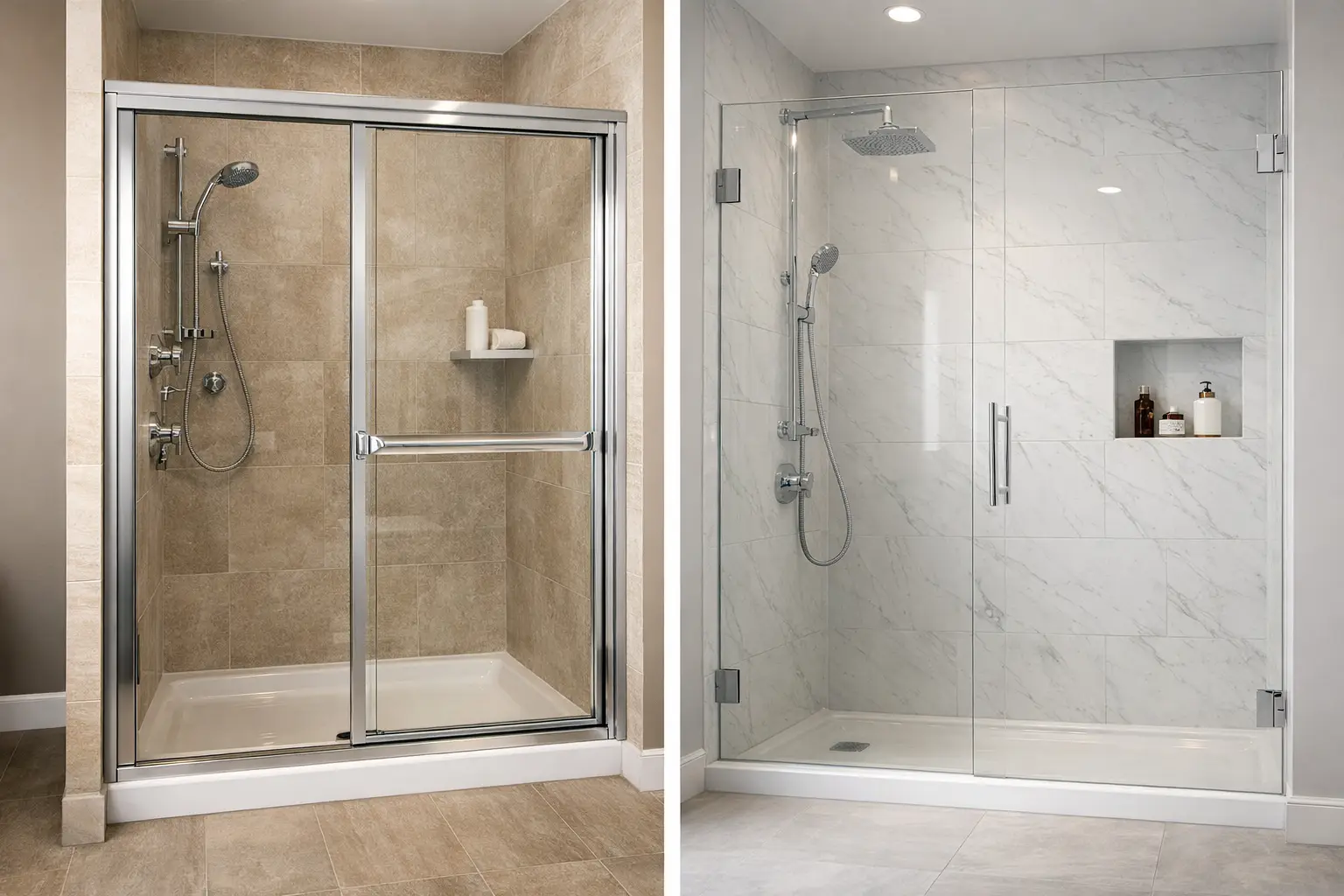
A shower enclosure does more than keep water off the bathroom floor. It sets the visual weight of the room, affects how easily the space cleans, and has to operate reliably every day. When comparing framed versus frameless shower doors, the right choice is rarely just about what looks best in a showroom. Your layout, wall conditions, tile work, budget, and preferred level of maintenance all matter.
For Edmonton-area homeowners planning a bathroom renovation or new build, the decision usually comes down to two priorities: a clean, open look or practical water control at a more accessible price point. Both can create a polished finished bathroom when they are measured accurately and installed with the right hardware.
Framed versus frameless shower doors: the key difference
A framed shower door uses metal framing around the glass edges, typically along the perimeter of the enclosure and often around the door itself. The frame provides structure, supports thinner glass, and incorporates seals and channels designed to direct water back into the shower.
A frameless shower door relies on thicker tempered safety glass and purpose-built hinges, clips, and handles instead of a full metal surround. You will still see hardware at connection points, but the glass remains the main visual feature. The result is a lighter, more architectural appearance that lets tile, stone, and fixtures take center stage.
There is also a useful middle ground. Semi-frameless shower doors retain framing in select areas for support and water management while minimizing visible metal around the door panel. This option can suit homeowners who want a more open look without committing to a fully frameless configuration.
How each option changes the look of your bathroom
Frameless glass makes a compact bathroom feel less enclosed. With fewer visual interruptions, the eye travels through the glass to the tile and finishes behind it. That can be especially effective with a carefully planned walk-in shower, decorative wall tile, a linear drain, or a feature niche you want to show off.
The refined look of frameless glass also works well in larger primary bathrooms, where the enclosure can feel like a deliberate part of the room’s design rather than a separate utility feature. Hardware finishes can be selected to coordinate with faucets, towel bars, and cabinet pulls for a more considered result.
Framed doors offer a different kind of design value. Their defined outline can suit traditional bathrooms, rental property upgrades, and renovations where a crisp, practical enclosure is the priority. Modern frame profiles are available in finishes that can complement black fixtures, brushed nickel, chrome, and other common bathroom selections. A framed door does not have to look dated. The quality of the glass, frame profile, alignment, and installation makes a noticeable difference.
Water containment and everyday performance
This is one area where the details of the shower layout matter more than the style label. A framed enclosure typically has more built-in channels, sweeps, and seals, giving it an advantage where water containment is the primary concern. It can be a sensible choice for a shower that sees frequent family use or has a traditional curb-and-tub configuration.
Frameless doors use discreet seals at the door edge, bottom sweep, and panel connections. When a frameless enclosure is designed for the shower’s actual dimensions and properly installed, it provides effective everyday performance. However, it is not meant to be completely watertight in every direction. Small gaps are necessary for door movement, and excessive spray aimed directly at a door gap can allow water out.
The showerhead location, slope of the shower floor, curb height, and door swing all need to be considered before glass is ordered. A beautiful frameless door that opens into the wrong clearance zone or sits beside an aggressively aimed rain head is not a successful design. Proper planning protects both the appearance and the function of the finished space.
Cleaning: fewer edges versus more forgiving hardware
Frameless glass has fewer channels where soap residue and moisture can collect. That makes the enclosure easier to wipe down and helps maintain its clean visual lines. A quick squeegee after showering and a non-abrasive glass cleaner used regularly will go a long way toward reducing mineral buildup.
Framed doors have more joints, tracks, and corners that need attention. The bottom track in particular can collect water, hair, and soap residue, so it benefits from routine cleaning. The trade-off is that the frame can conceal minor wall irregularities and provides more defined sealing points.
Neither option is maintenance-free. Clear glass shows water spots more readily than textured or patterned glass, regardless of the frame style. If low-maintenance daily use is a major concern, discuss glass treatment options, hardware finishes, and cleaning access while selecting the enclosure. A door that looks excellent but is difficult to reach around is likely to become frustrating over time.
Installation requirements are not the same
Frameless shower doors require precision from the start. Thick tempered glass cannot be cut, drilled, or reshaped after it has been manufactured, so final measurements should be taken after the tile and finished surfaces are in place. The walls must be assessed for plumb and level conditions, while the proposed hinge and clip locations need appropriate structural backing.
This is particularly important in custom showers. Tile walls can appear straight while still varying enough to affect glass gaps, door alignment, and sealing. Professional measurement accounts for those realities rather than assuming the opening is perfectly square.
Framed doors are generally more adaptable. Their frame systems can accommodate a degree of variation in wall conditions, which may make them a practical fit for certain renovation projects. That flexibility does not eliminate the need for careful installation. Incorrectly set tracks, poorly sealed edges, or an out-of-level door can create water issues and premature wear in any enclosure.
Door operation should be planned as carefully as the glass itself. Consider where the door will swing, whether it may contact a vanity or toilet, and how someone will enter and exit the shower. In tighter bathrooms, a sliding framed system, a fixed panel with a properly positioned opening, or a different door configuration may serve the space better than a standard hinged door.
Cost and long-term value
Framed doors are usually the more budget-conscious option because they use thinner glass and a structural frame system. They can provide a significant visual upgrade over a shower curtain or aging enclosure while keeping renovation spending focused on other priorities, such as tile, flooring, or cabinetry.
Frameless doors typically cost more due to thicker tempered glass, specialized hardware, custom fabrication, and the precision required during measurement and installation. For many homeowners, that investment is worthwhile because it elevates the entire bathroom and allows premium wall finishes to remain visible.
Value should be measured against the finished room, not only the initial door price. In a well-designed primary bathroom, a custom glass enclosure can reinforce the quality of the renovation and support the home’s overall presentation. In a secondary bathroom, basement suite, or practical family remodel, a durable framed or semi-frameless system may be the better allocation of budget.
Which shower door is right for your project?
Choose a framed shower door when you want dependable water containment, a cost-conscious upgrade, and flexibility for walls that may not be perfectly square. It is also a strong choice when the enclosure needs to work hard without becoming the focal point of the bathroom.
Choose a frameless shower door when your goal is an open, custom appearance and you want tile, stone, or other finishes to remain highly visible. It is best suited to layouts that can accommodate proper door clearances, suitable wall backing, and careful final measurements.
Consider semi-frameless when you want a balance between the two. It can provide a cleaner visual profile than a fully framed system while retaining some of the practical advantages of framed construction.
The strongest choice starts with the actual space, not a stock door size or a photo saved for inspiration. A custom glass professional can review measurements, finished materials, water direction, mounting conditions, and hardware options before fabrication. That guidance helps prevent the costly compromise of forcing an enclosure style into a layout that does not support it.
A shower door should feel effortless once it is installed: clear glass where you want openness, reliable hardware where you need strength, and a fit that respects every line of the bathroom. When the enclosure is designed around your room rather than around a generic opening, it becomes one of the details that makes the whole renovation feel complete.
Leave a Reply