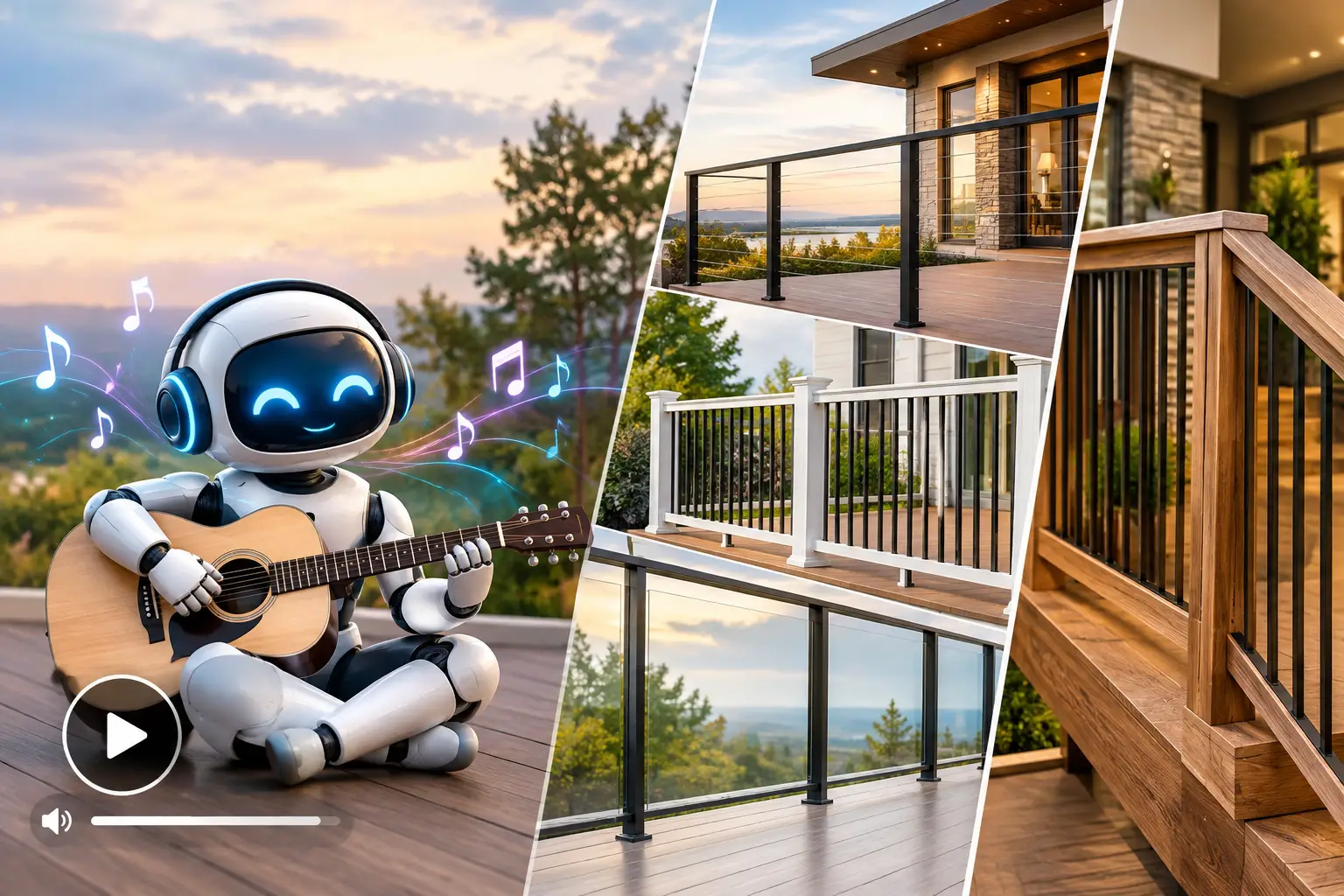
A new deck, stairway, balcony, or front entry can look nearly finished until the railing goes in. That final detail has a major effect on how the space feels, how safely it functions, and how well it holds up through Edmonton-area weather. The right railing systems do more than define an edge. They protect the people using your property while giving the overall design a clean, considered finish.
For homeowners, builders, and designers, the best choice is rarely just a matter of picking a color from a catalog. Layout, sightlines, mounting conditions, local code requirements, maintenance expectations, and the character of the home all matter. A railing should feel like it belongs there, while performing reliably for years.
Start With the Space, Not the Product
It is tempting to choose a railing style based on a photo alone. Photos are useful for identifying what you like, but the actual site determines what will work. A balcony with a view of a ravine calls for a different approach than a raised backyard deck or a busy commercial entry. Indoor stairs bring another set of considerations, including hand placement, wall conditions, tread layout, and how the railing connects with nearby finishes.
Begin by looking at where people will move and where the risks are. Is the railing guarding a drop? Is it providing a graspable handhold on stairs? Does it need to create a boundary without making a compact patio feel closed in? These questions shape the design long before material samples enter the conversation.
A precise site measure is particularly valuable on renovation projects. Existing concrete, wood framing, pavers, siding, or finished flooring may limit mounting options. Small variations in level or alignment can affect the final fit. Custom planning helps prevent a polished design from being compromised by gaps, awkward post placement, or a rushed field adjustment.
Aluminum Railing Systems Offer a Practical Balance
Premium aluminum railings are a popular option for exterior residential spaces because they balance a refined appearance with dependable performance. Aluminum does not rust like untreated steel, and quality powder-coated finishes offer a durable surface that is well suited to changing temperatures, moisture, and regular use.
For a traditional or more defined look, aluminum pickets provide rhythm and visibility without leaving an open edge exposed. They work well on decks, stairs, porches, and walkways, particularly when homeowners want a low-maintenance alternative to painted wood. A dark finish can create crisp contrast against lighter siding, stone, or composite decking, while a lighter finish may blend quietly into a more understated exterior palette.
Glass infill is another strong choice when preserving the view is a priority. It can make a deck feel more open and allows natural light to move through the space. That said, clear glass shows rain spots, dust, fingerprints, and pollen more readily than pickets. For many homeowners, the visual payoff is worth periodic cleaning. For others, a picket design is the more practical match for their routine.
The best material is the one that supports how you actually use the space, not simply the one that looks best on installation day.
Safety and Code Are Part of Good Design
A railing is a safety feature first, which is why dimensions, spacing, height, attachment methods, and load requirements deserve careful attention. Requirements can vary by project type and municipality, so a professional review is especially helpful for elevated decks, balconies, stairs, and commercial spaces.
The visible portion of a railing is only part of the system. The strength of the finished installation depends heavily on what happens at the base and behind the surface. Posts need appropriate anchoring, and the supporting structure must be able to handle the forces applied to it. A beautiful railing mounted to weak framing or deteriorated concrete is not a successful installation.
This is also where one-size-fits-all kits can fall short. They may be appropriate for simple conditions, but they do not always account for unusual corners, transitions, slopes, finished surfaces, or nonstandard dimensions. Professional installation provides the opportunity to assess those details before they become problems.
Stair Railings Need Their Own Plan
Stairs ask more from a railing than a level deck edge. Users need a comfortable, continuous handhold that follows the stair run and feels secure under the hand. The angle, return details, transitions, and post locations all need to work together.
On interior stairs, railings can become a defining architectural feature. Slim black aluminum paired with warm wood treads creates a modern contrast, while glass can keep an open-concept stairwell bright and visually connected. On exterior stairs, durability and reliable footing take greater priority, especially where snow and ice are common. The goal is a design that looks intentional without making safe access more complicated.
Choose a Style That Supports the Architecture
The strongest railing designs tend to complement a home’s existing lines rather than compete with them. Modern homes often suit streamlined aluminum profiles, clean horizontal elements where permitted, or glass panels that preserve an open view. More traditional homes may benefit from classic vertical pickets and proportioned posts that echo the structure’s familiar details.
Color matters as much as profile. Black remains a versatile choice because it works with many siding colors, window frames, and exterior accents. Bronze, white, and custom finish options can be equally effective when they connect the railing to the rest of the property. Rather than treating the railing as an isolated purchase, consider it alongside doors, trim, decking, lighting, and landscape features.
For designers, consistent detailing across spaces can make a project feel complete. An exterior railing finish that relates to an interior stair feature, shower hardware, or window trim can create subtle continuity without making every element match exactly.
Plan the Installation Before Other Finishes Are Finalized
Railing decisions are easier when they are made early enough to coordinate with the rest of the project. On new decks, this may mean confirming post locations before decking is complete. On a renovation, it can mean assessing the condition of an existing surface before committing to a mounting method.
Top-mounted posts, fascia-mounted configurations, and side-mounted options each affect the usable floor area, visual profile, and structural planning. A top-mounted post may be straightforward and familiar, while a fascia-mounted system can preserve more deck space and create a cleaner sightline. Neither is universally better. The right choice depends on the structure, the finished appearance you want, and whether the installation can be properly supported.
Thoughtful planning also helps with transitions. Gates, stair openings, corners, and changes in elevation should be resolved as part of the full layout rather than added at the end. This produces a cleaner result and helps avoid unnecessary delays once installation begins.
What Professional Support Adds to the Finished Result
Custom railing work benefits from a process that connects design guidance with accurate measurements and skilled installation. At Accel Glass Services, the focus is on understanding the project first, then recommending a solution that fits the space, budget, and intended use. That can mean helping a homeowner compare glass and picket options, working with a designer to maintain a specific visual direction, or coordinating details around an existing renovation schedule.
Quality control matters at every stage. Materials should be inspected, components should align cleanly, and the finished railing should feel solid and look balanced from every angle. Good workmanship is often most visible in the details: consistent spacing, tidy connections, well-planned transitions, and a finish that sits naturally within the architecture.
A railing is not an accessory to settle for at the end of a project. When it is measured carefully, built around the site, and installed with attention to safety, it becomes a lasting part of how your home looks, moves, and protects the people in it.
Leave a Reply