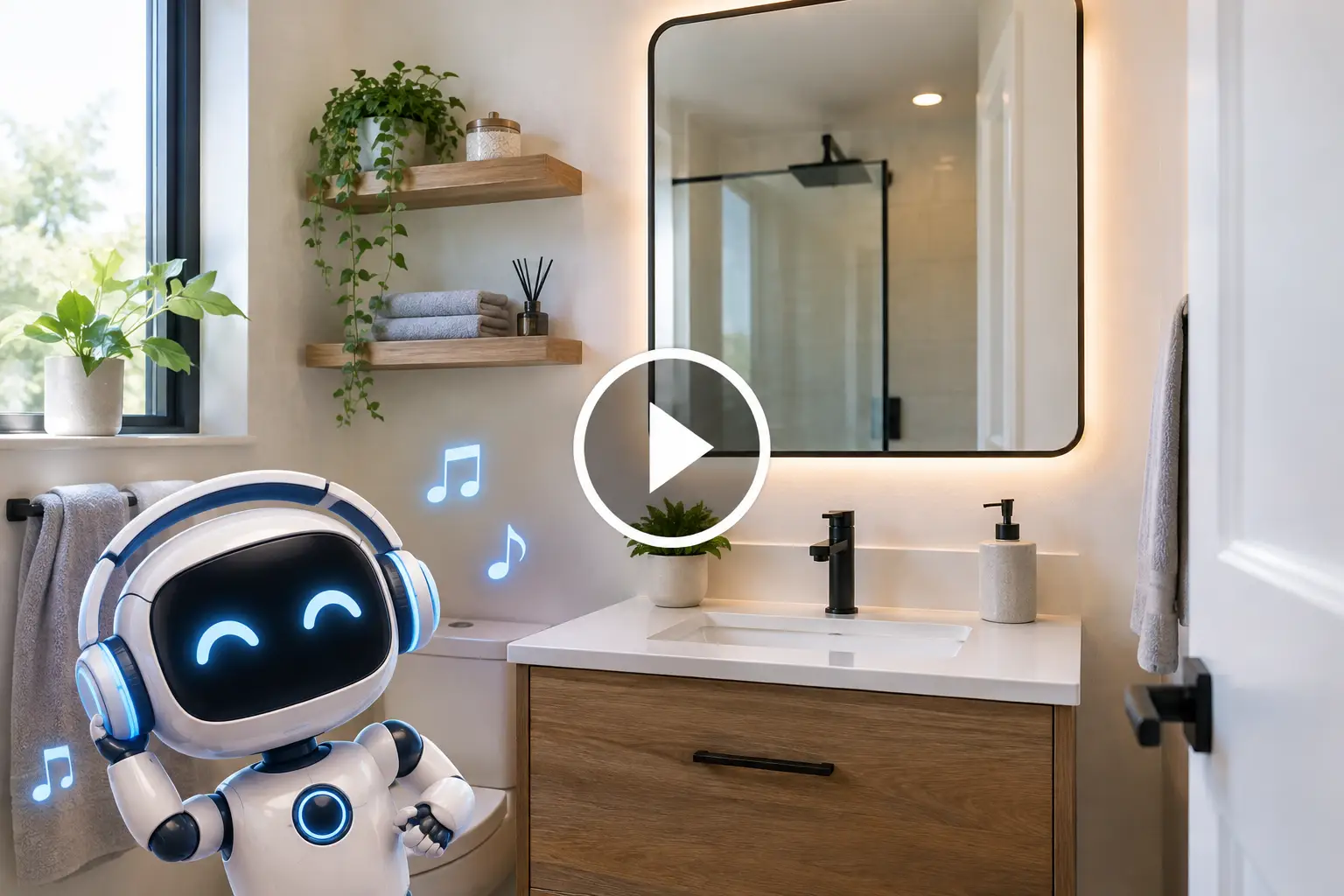
A small bathroom can feel finished or frustrating based on one decision: the mirror. The best mirrors for small bathrooms do more than reflect your face. They spread light, create visual depth, support your daily routine, and give the vanity wall a deliberate, polished presence without adding physical bulk.
That does not automatically mean choosing the largest mirror available. A mirror that overwhelms a narrow vanity, blocks a sconce layout, or is mounted without proper support can make a compact room feel less considered. The right choice balances scale, lighting, storage, wall conditions, and the style of the room.
Start With the Vanity, Not the Empty Wall
The vanity establishes the natural width for a bathroom mirror. In most small bathrooms, a mirror that is slightly narrower than the vanity creates the cleanest proportions. Leaving a few inches of wall visible on each side makes the fixture look intentional, while giving faucets, lights, and cabinetry room to read as separate design elements.
A 24- to 30-inch vanity often suits a mirror between 20 and 28 inches wide. This is a guideline rather than a fixed rule. If the vanity is centered in a tight alcove, a wider mirror may make better use of the available wall. If sconces sit on both sides, a narrower mirror may be necessary to maintain comfortable spacing.
Height deserves the same attention. The bottom edge should generally clear the faucet and backsplash, while the top should serve the people using the room. A mirror placed too high can look elegant in a photo but be inconvenient for shorter household members. In a powder room used by guests, a taller vertical mirror is often a practical choice because it works for a wider range of users.
The Best Mirrors for Small Bathrooms Use Light Well
Mirrors cannot create natural light, but they can make existing light work harder. Positioning a mirror opposite or adjacent to a window can bounce daylight farther into the room. In bathrooms without windows, the mirror becomes part of the lighting plan rather than a separate finishing item.
Front-facing light is the most useful for grooming. Side sconces at face level reduce shadows around the eyes and chin, while an illuminated mirror can provide an even glow in a compact layout. A backlit mirror creates a softer halo on the wall and can make a small bathroom feel more layered, but it should not be the only source of task lighting where shaving, makeup, or detailed skincare is part of the routine.
Consider the finish of the surrounding surfaces, too. Clear glass, pale tile, warm paint, and polished fixtures all influence what the mirror reflects. A large mirror facing a cluttered towel hook or an open storage shelf will double that visual noise. Before finalizing placement, stand at the vanity and look at what the mirror will actually show.
Choose a Shape That Supports the Room
Rectangular mirrors remain a strong choice because they align easily with vanities, tile lines, and wall cabinets. A vertical rectangle can make a low ceiling feel taller, especially in a narrow bathroom. A horizontal rectangle can visually widen the wall above a broader vanity, though it may feel too low and stretched in a particularly tight space.
Round and oval mirrors soften bathrooms full of straight lines. They work especially well above compact floating vanities or pedestal sinks, where a sharp-edged rectangular mirror may feel heavy. An arch-top mirror adds height and a tailored architectural detail, but it needs enough clear space above it to look purposeful.
There is no single best shape for every room. A round mirror can be beautiful, yet it may sacrifice useful reflective area over a shared vanity. Conversely, a full-width rectangle can improve function but look too formal beside a curved faucet and organic tile. The strongest designs repeat a cue already present in the room, such as rounded hardware, black metal framing, or clean linear cabinetry.
Framed, Frameless, or Recessed?
A frameless mirror is often the most efficient option in a small bathroom. Its clean edge keeps the wall visually open, and a custom-cut piece can be sized precisely around lighting, tile, or a narrow vanity. Frameless mirrors are also versatile. They can suit modern, transitional, and more traditional spaces depending on the rest of the finishes.
Framed mirrors add contrast and character. A slim metal frame can define the vanity wall without consuming much visual space, while a thicker wood-look frame can bring warmth to a bathroom with cool tile and chrome fixtures. The trade-off is projection and visual weight. In a busy small bathroom, an oversized or heavily ornamented frame can make the room feel crowded.
Recessed medicine cabinets solve a different problem: storage. If the wall cavity and plumbing layout allow it, a recessed mirrored cabinet keeps daily items accessible without taking up counter space. This can be a smart choice for a family bathroom, but installation needs careful planning. The opening must avoid electrical wiring, pipes, and structural framing, and the cabinet must be level, secure, and properly finished at the wall.
Custom Sizing Often Delivers the Cleanest Result
Standard mirror sizes work well when the vanity and wall layout are straightforward. They become less convincing when a small bathroom has an off-center sink, a sloped ceiling, a tile feature wall, or sconces set at unusual spacing. In those cases, custom sizing removes the compromises that are most visible after installation.
A custom mirror can run nearly the full width of a vanity wall, stop precisely above a backsplash, or fit between two lights with equal reveals on both sides. It can also be cut to accommodate outlets, wall transitions, or a nearby cabinet. The benefit is not simply a larger mirror. It is the sense that every edge belongs where it is.
At Accel Glass Services, mirror projects are approached as part of the full room rather than an isolated piece of glass. Accurate site measurements, fabrication guidance, and professional installation help prevent common problems such as uneven gaps, poor alignment, chipped edges, or hardware that does not suit the wall construction.
Do Not Treat Mounting as an Afterthought
Bathroom mirrors face humidity, frequent cleaning, and daily use. Mounting methods should suit the size and weight of the mirror as well as the backing material. Drywall, tile, masonry, and wood blocking each require a different approach. A large mirror installed on tile may need specialized anchors or a combination of mechanical clips and approved adhesive.
Adhesive alone is not always the right answer. Some products can damage mirror backing over time if they are not made specifically for mirrors. Mechanical fasteners offer security and serviceability, but visible clips become part of the design. Concealed mounting can create a cleaner result, though it requires careful planning and precise installation.
For households with children, rental properties, or high-traffic bathrooms, safety backing is worth discussing. This film helps retain fragments if glass breaks. It does not replace proper mounting, but it adds another layer of protection where durability matters.
Small Details Make the Mirror Feel Built In
The spacing around the mirror should be consistent wherever possible. Even a narrow reveal between the mirror and a sconce, side wall, or tile edge can look refined when it is balanced. Misaligned lighting, uneven clip placement, and an off-center mirror are small details that draw attention for the wrong reasons.
Think about maintenance before choosing a design. A frameless mirror is easy to wipe down, while deeply textured frames can collect dust and hairspray residue. Integrated lighting should use components that can be serviced, and any electrical work should be coordinated with a qualified professional. In a compact room, a mirror that stays clean and performs reliably is more valuable than a trend that becomes tiresome after a season.
A well-sized, carefully mounted mirror gives a small bathroom more than the appearance of extra space. It gives the room a calmer rhythm every time the light comes on, the vanity is used, and the door opens.
Leave a Reply