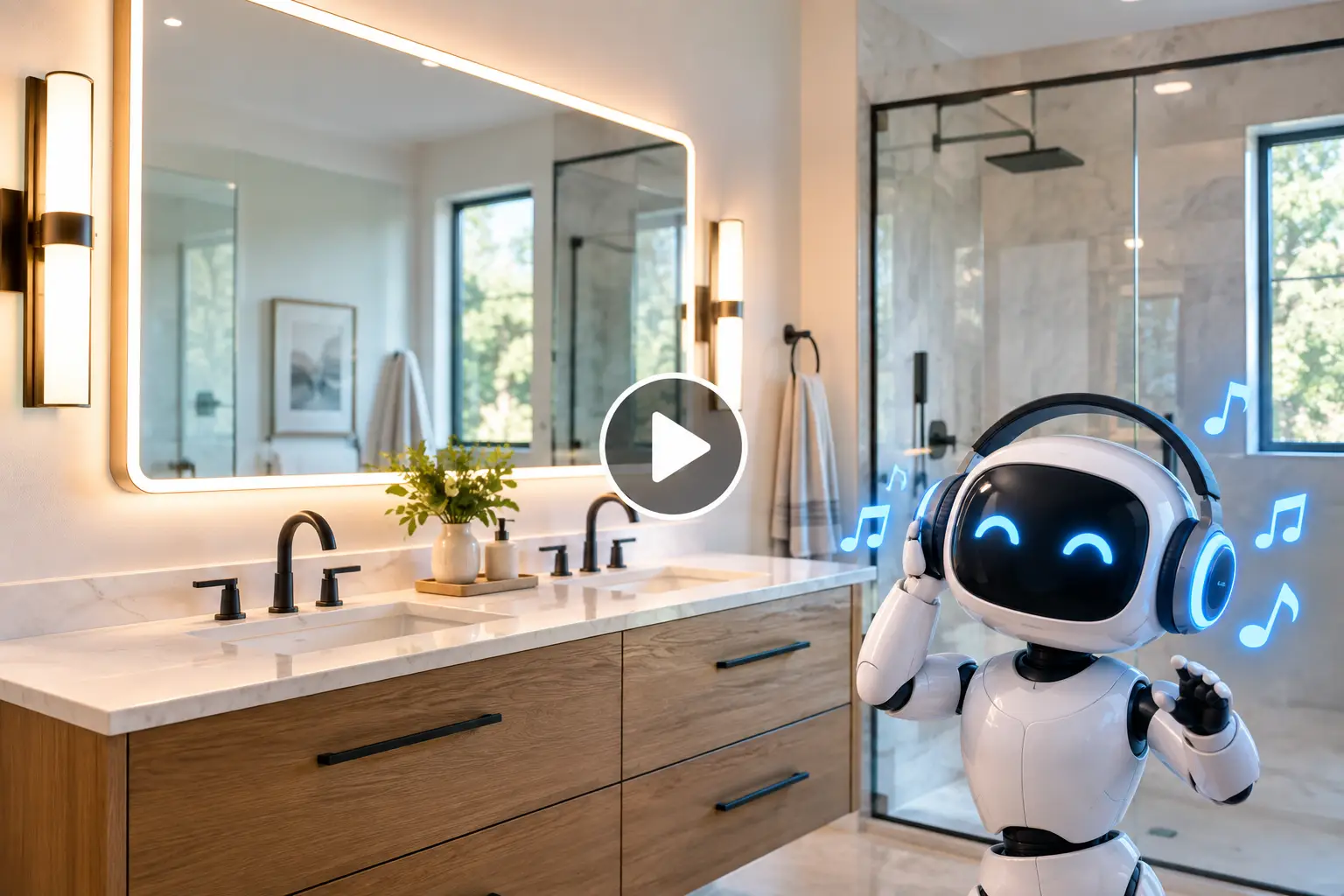
A bathroom mirror is no longer treated as a last-minute accessory above the vanity. Current bathroom mirror trends place it at the center of the room’s lighting, proportion, storage, and overall finish. For a renovation or new build, the right mirror can make a compact ensuite feel more open, give a double vanity the presence it deserves, and connect the glass, tile, fixtures, and cabinetry into one intentional design.
The best choice is not always the most elaborate one. It is the mirror that fits the room accurately, supports how the bathroom is used, and is installed with the care a finished space requires. Here are the directions shaping polished, practical bathroom projects across the Edmonton area.
Bathroom Mirror Trends That Balance Style and Function
Larger mirrors with deliberate proportions
Oversized mirrors remain one of the strongest design choices, particularly above wide vanities. A large, uninterrupted reflective surface expands the visual boundaries of the room and distributes light more effectively than a small, isolated mirror. In a bathroom with limited natural light, that difference is immediately noticeable.
“Large” should not mean arbitrary. The mirror needs to relate to the vanity width, faucet placement, wall sconces, and ceiling height. A single custom mirror may run nearly the full width of a vanity, while a double vanity may look better with two individually centered mirrors. The most polished result comes from intentional spacing rather than trying to fill every available inch of wall.
For homeowners who want a clean, architectural appearance, a wall-to-wall mirror is still a compelling option. It works especially well behind a floating vanity or in a contemporary bathroom where visible breaks would feel busy. The trade-off is that larger glass panels require accurate site measurements, suitable wall preparation, and professional handling during installation.
Soft curves in tailored spaces
Rounded rectangles, pill-shaped mirrors, and gentle arches have moved beyond the trend cycle into a lasting design language. Their softer profiles balance the straight lines commonly found in vanity cabinets, porcelain tile, shower glass, and stone counters. They can make a bathroom feel more inviting without sacrificing a refined look.
A rounded mirror is often most effective when it echoes another detail in the room, such as an arched niche, curved faucet, or rounded cabinet hardware. In a highly traditional bathroom, an arch can add character. In a modern space, a slim rounded rectangle offers a more restrained version of the same idea.
This is also where custom sizing matters. Standard retail mirrors can leave awkward gaps or sit too high above the backsplash. A mirror tailored to the wall and vanity allows the curve, width, and height to feel properly resolved rather than selected as an afterthought.
Frameless glass for a quieter finish
Frameless mirrors continue to suit homeowners who want a clean, expansive look. Without a visible border, the mirror reflects tile, lighting, and finishes instead of competing with them. This makes frameless glass particularly effective in smaller bathrooms, minimalist interiors, and spaces with beautiful feature tile.
The detail is in the edges and mounting. Professionally finished polished edges create a crisp appearance, while careful placement keeps the panel level and aligned with surrounding lines. A frameless mirror can be simple in appearance, but it is not a casual installation. Wall conditions, adhesive selection, mounting support, and access around electrical fixtures all need consideration.
Frameless does not have to mean plain. A custom-cut mirror can incorporate a distinctive silhouette, follow an angled ceiling, fit between sconces, or align precisely with a tiled wall layout. The look stays understated while the work behind it remains highly specific.
Thin metal frames with warmer finishes
For bathrooms that need definition around the vanity, narrow framed mirrors are a practical and attractive alternative. Black remains a dependable choice with matte black faucets and contemporary hardware, but warmer finishes are gaining attention. Brushed bronze, soft brass, and champagne-toned frames can bring depth to bathrooms with warm wood cabinetry, creamy stone, or earth-toned tile.
The key is restraint. A thin frame provides enough contrast to anchor the mirror without making the wall feel heavy. Wider or more ornate frames can be successful in a traditional setting, but they need enough visual space around them to avoid crowding the vanity area.
When coordinating metals, an exact match is not always required. A bathroom can feel more layered when the mirror frame is a complementary tone rather than an identical finish. What matters is that the combination looks purposeful. If the room already includes statement lighting, textured tile, and bold hardware, a frameless or very slim-frame mirror may provide better balance.
Backlit and front-lit mirrors for better daily use
Integrated lighting has become one of the most functional bathroom mirror trends. Backlit mirrors cast a soft halo on the wall, adding atmosphere and helping a bathroom feel less shadowed. Front-lit designs place illumination closer to the face, which can be more useful for grooming, makeup application, shaving, and skincare.
Lighting performance should guide the decision more than appearance alone. A backlit mirror can create a beautiful evening mood, but it may not replace properly placed vanity lighting. Side-mounted sconces or well-positioned overhead lighting can still be necessary for clear, even facial illumination.
Before selecting an illuminated mirror, consider electrical access, switch location, color temperature, and whether the model includes features such as dimming or an anti-fog function. These options can improve everyday comfort, but only when the electrical and installation plan supports them from the start. Retrofitting is possible in some bathrooms, although it may involve opening walls or coordinating additional trades.
Layered mirror arrangements
One large mirror is not the only answer. In double-vanity bathrooms, two matching mirrors create rhythm and offer each person a defined grooming area. In powder rooms, a single feature mirror can become a focal point, especially when paired with decorative wallcovering, stone, or a sculptural light fixture.
Layering can also mean placing a mirror against a partial backsplash or between vertical tile sections. These approaches work best when the boundaries are clean and intentional. A mirror that stops at a tile line, aligns with the vanity, or centers precisely on the faucet reads as crafted. One that lands awkwardly between visual elements can make even premium finishes feel less considered.
How to Choose the Right Mirror for Your Bathroom
Start with the room’s use. A guest powder room gives you more freedom to choose a dramatic shape or decorative frame because the mirror is used less intensively. A busy primary bathroom usually benefits from generous reflective area, dependable task lighting, easy-to-clean surfaces, and proportions that serve more than one user.
Next, look at the vanity as the anchor. In many layouts, a mirror slightly narrower than the vanity creates a balanced result. For a double vanity, two mirrors often work best when they are equal in size and centered over each sink. However, a single full-width mirror can be the stronger choice when the goal is to make the room feel broader or when the cabinetry has a clean, uninterrupted profile.
Height matters as much as width. The mirror should comfortably serve the people using it while leaving appropriate clearance above the faucet and below the ceiling or light fixture. There is no universal mounting height that suits every project. Ceiling height, backsplash depth, household needs, and fixture placement all affect the final measurement.
Then consider what the wall can support. Mirrors are substantial pieces of glass, especially when custom cut at larger dimensions. Stud locations, backing, tile, drywall condition, and nearby electrical work affect the mounting strategy. This is one reason accurate field measurement and experienced installation protect both the mirror and the finished wall surface.
Custom Work Turns a Trend Into a Finished Design
Trends provide direction, but custom glasswork is what allows a mirror to belong in the room. A tailored mirror can fit around sconces, follow an unusual wall dimension, align with a vanity that does not match standard sizes, or create a precise visual relationship with shower glass and tile.
For renovation clients, this is often the difference between a bathroom that looks almost complete and one that feels professionally finished. The mirror is highly visible every day, and small alignment issues stand out. Clean edge finishing, appropriate mounting, and careful final checks are details worth protecting.
At Accel Glass Services, the process begins with the design vision and the actual conditions of the space. From custom mirror dimensions to installation coordination, the goal is a result that looks polished, performs reliably, and supports the way your home is used. Whether your preference is a quiet frameless panel, a warm framed statement, or a lighted mirror planned around a complete remodel, the right glasswork should make the rest of the room look even better.
Leave a Reply